Essays Politics Research
Thoughts on POWER (Alain)
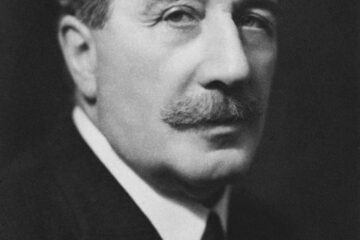
Summary of “Propos sur le Pouvoir” by the French philosopher, journalist and professor Alain (1868-1951). Themes addressed include: political leadership, corruption, and democracy.
Summary of “Propos sur le Pouvoir” by the French philosopher, journalist and professor Alain (1868-1951). Themes addressed include: political leadership, corruption, and democracy.
Summary of Simone Weil’s note on the abolition of all political parties. She regards them as makers of collective passions, impediments to critical thinking, and power-hungry machines. She presents her ideal vision of what the political scene should look like.
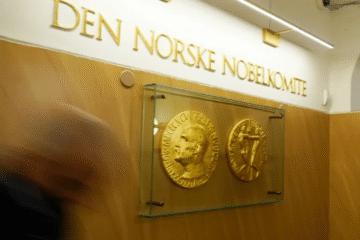
Although the Nobel Peace Prize is intended as an instrument for peace and fraternity, some awards have been politically contentious. The prize is also criticised as a Western diplomatic tool.
Summary of Hannah Arendt’s essay written in 1967. She gives a compelling description of the relationship between lying and power in totalitarian regimes. Her work resonates with current challenges posed by the post-truth era.

Perpetrator, victim or both at the same time? This question is a core difficulty faced by societies in Sub-Saharan Africa and the Middle East when dealing with people affected by terrorism. In order to tackle terrorism, including its manifestations and root causes, and heal from it, States may choose to Read more…

Your 5-MINUTE WEEKLY DOSE OF GEOPOLITICS. This week : Germany has realised the importance to ramp up national and European defence capabilities, but has it really the means and will to do it?

Summary of Hannah Arendt’s essay written in 1972. She takes the episode of the Pentagon Papers during the Vietnam war to reflect upon the subject of lying in politics.
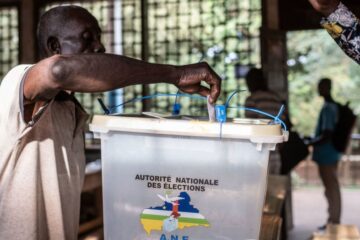
Comment améliorer la gouvernance en Afrique? Par le haut, en renforçant les institutions étatiques déjà (trop) fortes? La voie populaire, par le bas, est-elle alors à privilégier?

Is a Western-dominated world order really a guarantee for peace? How has the shift from power rivalry to power inequality changed warfare? What is “weakness politics”? Does peace still exist?
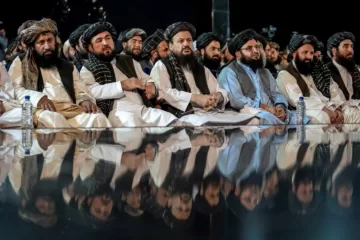
How likely is it that the Taliban regime will collapse in 3 to 5 years? Will internal divisions, rebel groups, popular unrest and foreign pressure make it fall?
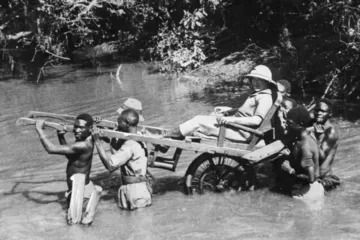
How was political, economic and cultural domination organised? What were the different modes of colonial administration? How was the colonial system challenged both in the metropole and in the colonies?

How were racial hierarchies justified and implemented? Why was there also a hierarchy among colonised populations? How did colonial conquests fuel imperial rivalries?
What are the shortcomings of the EU’s intelligence apparatus? Is a European Intelligence Agency the solution? How to foster cooperation between member States?

What are the Geneva and La Haye conventions? What are the three components of the Law of Armed Conflicts? Are human rights law and humanitarian law the same? What are the 5 core principles of the LOAC?
What are the two tenets on which rests the concept of nation? Are nations eternal? Are they linked to notions of race, language, religion, interest or geography?
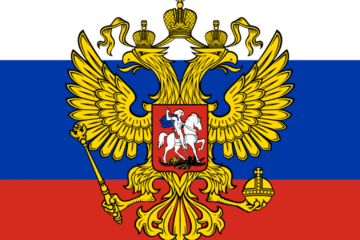
Twelve centuries of Russian history to discover how Russia has built its identity under the Mongols, Ivan the Terrible, the Romanov, the Soviet Union and now Vladimir Putin.

Is it a “win-win” relation? Does China help Africa develop? Does it use “debt-trap diplomacy”? How does China play the big brother? What challenges will it face?
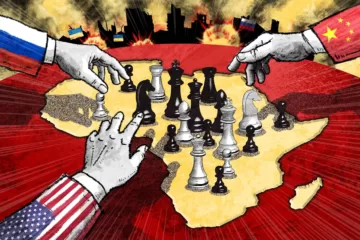
Liberal actors see Africa as a proxy landscape for their power rivalry with illiberal countries. However, they forget that African States have their own agency and that it’s not a simple zero-sum game, a vacuum is not always spatial.
How does passive representation lead to active representation? How does it work in bureaucracies? Are quotas really useful in politics?
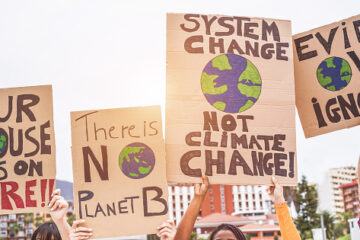
How can public opinion impact public policies? When can it do so? Is it the most important public policy determinant?